
The European Anti-Poverty Network organises a conference in Brussels every year that brings together not only NGO activists but more importantly people who are experiencing or have experienced poverty, the PEP Meeting. The main goal is to make people with this experience visible, for their voices to be heard, and for them to establish direct contact with policymakers. The “Patrija” association has been conveying experiences from Serbia at this gathering for several years, and every year it enables one of its users to participate in the conference. This year, Boris Danilovac, a member of “Patrija” and a vendor of the street magazine Liceulice in Novi Sad, was in Brussels.
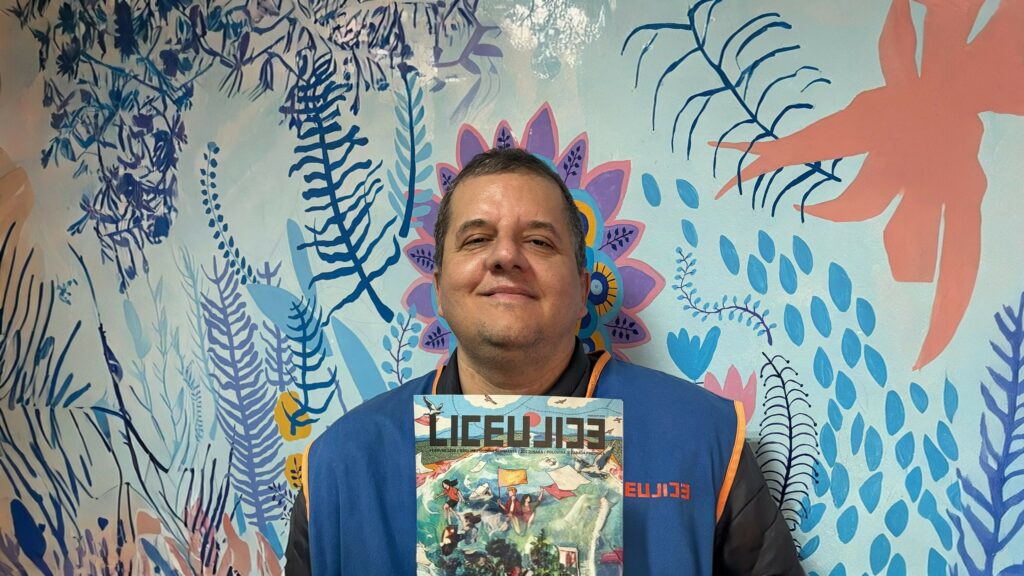
This was Boris’s first plane flight. He was a little anxious about the flight, but he says the journey went well. The excitement and slight nervousness disappeared quickly after the start of the conference. There, he had the opportunity to meet participants from various European countries, and he was proud to try out a conversation in English. He especially enjoyed the workshops because he felt that people accepted him and that he could speak openly about the topics he wanted. While talking about the new experience, he recalls the period from five years ago when he rarely went out and avoided meeting unknown people. He is glad that he has overcome that phase and emphasizes that conversations with people mean a lot to him now, especially while selling the magazine on the street.
“Poverty is higher in Serbia. I heard that we are one of the poorest countries in Europe. That makes me a little sad,” says Boris. He advises other people in a similar situation to sell Liceulice, and he would like them to visit Brussels and be part of the conference. This experience inspired him to educate himself more about poverty and homelessness in Serbia, and he is also thinking about holding a workshop on this topic with volunteers from “Patrija“.
Boris’s story reminds us that conferences like this are not just formal gatherings, but a space where people get the opportunity to be seen, heard, and recognized; places where solidarity is built, experiences are exchanged, and a sense of common struggle is created. The European Anti-Poverty Network (EAPN) insists on improving policies, emphasizing the importance of the participation of people who have experienced poverty in making decisions that affect them. Their inclusion is therefore not just a symbolic act, but a key condition for creating a fairer and more solidary society.
Liceulice 119, February 2026