
EAPN welcomes the European Commission’s commitment to eradicating poverty through the first-ever EU Anti-Poverty Strategy. This is a historic moment for millions of people across Europe who experience or have experienced poverty, for those working on the ground, and for organisations that have long called for such an initiative, in particular the European Anti-Poverty Network. In a context marked by relentless crises, deepening social inequalities, austerity, deregulation and war, this represents an important political step forward.
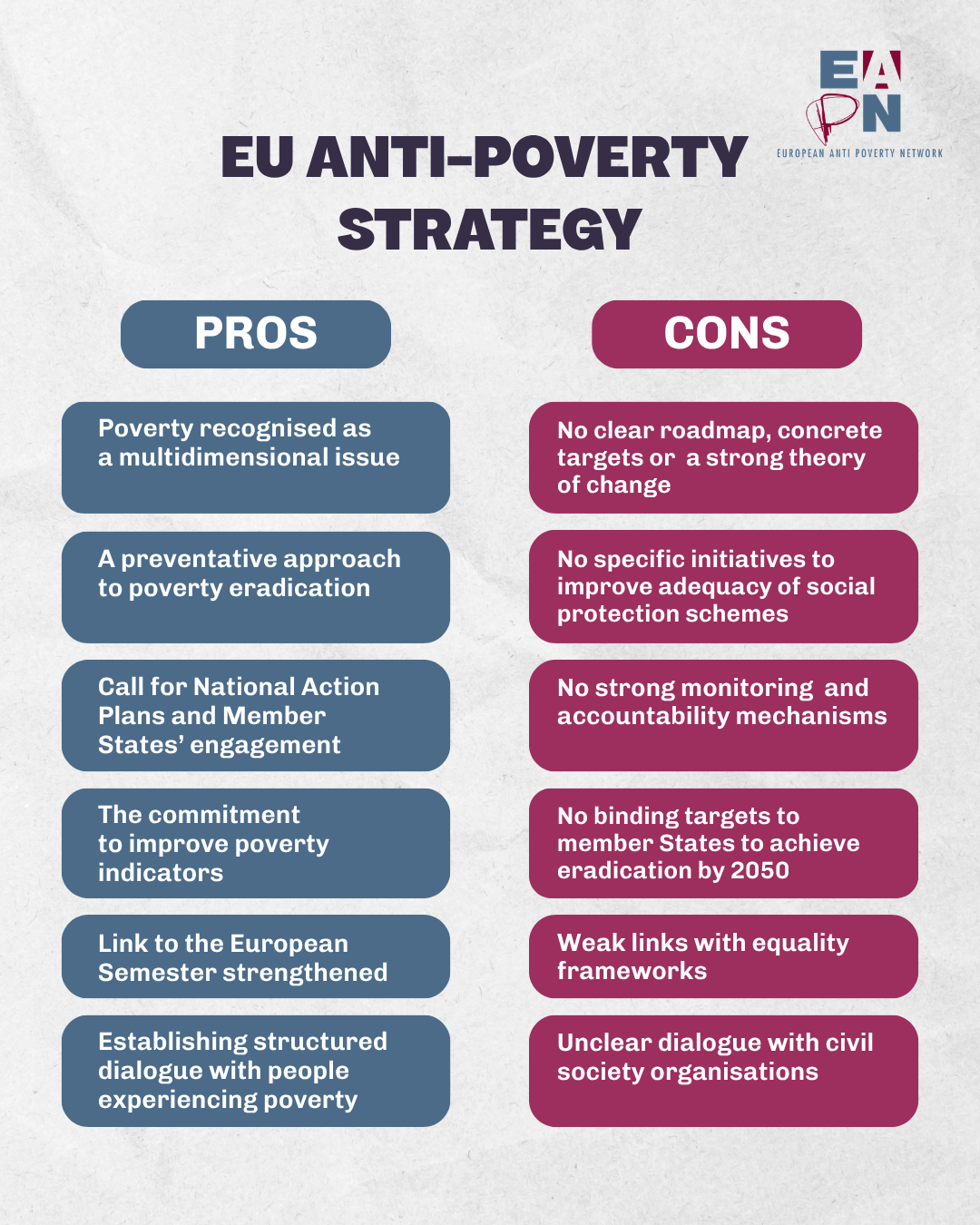
However, unless it is matched by concrete action, it will remain words on paper. Real work begins now.From EAPN’s initial analysis, we note several positive elements. The strategy recognises that poverty affects people across the life cycle in all areas of life, emphasises the role of prevention as a key component of eradication, and calls on Member States to develop national and local anti-poverty strategies, an essential step toward achieving eradication. The Strategy is also proposing a Council Recommendation to address in-work poverty. It will also implement a structured and meaningful dialogue with people with lived experience of poverty. It also compromises with the review of indicators to better measure poverty.
At the same time, it falls short in key areas. It lacks clear, binding targets and pathways toward eradication and does not sufficiently address the systemic root causes of poverty and social exclusion. Also, the strategy doesn’t address the inadequacy of the existing social protection schemes, a cornerstone to any anti-poverty and social inclusion efforts. Our main concern is the gap between the Commission’s stated ambitions and its broader political priorities, including ongoing underinvestment in social rights, alongside increased focus on defence, security and competitiveness. EAPN will launch a more detailed analysis in the upcoming weeks.
We stand ready to work with EU institutions and Member States to ensure that this strategy leads to real, measurable change in people’s lives.